Building for Purpose
Woodworking is about solving problems with timber. When the garden needed better seating for entertaining and relaxing, commercial options were either too expensive, too flimsy, or didn't fit the available space. The solution was to design and build custom furniture from scratch — made to exact dimensions, built to last, and tailored to how the space would actually be used.
Out of many woodwork projects over the years, these outdoor pieces have proven to be the most useful. The L-shaped corner bench and matching dining table have become the centre of garden life — hosting summer BBQs, providing a quiet spot for morning coffee, and giving the outdoor space a permanence and functionality that ready-made furniture never could.
Design & Planning
The design process started with measurements and constraints. How much space was available? How many people needed to be seated comfortably? What would the sight lines be like? Where would the sun hit at different times of day? These practical questions shaped every decision — from the bench's L-shaped configuration to the table's dimensions and height.
Sketches evolved into detailed plans with exact measurements, cut lists, and joinery methods. Timber selection balanced cost, durability, and aesthetics — pressure-treated softwood for the structural frame, planed timber for visible surfaces. The designs favoured simplicity and strength over decorative complexity, prioritising clean lines and robust construction that would withstand years of outdoor use.
Construction & Techniques
Timber Selection
Pressure-treated timber for structural frames ensures rot resistance. Planed softwood for seating surfaces provides a smooth, splinter-free finish.
Joinery
Half-lap joints, mortise and tenon connections, and galvanised coach bolts create rigid, weather-resistant frames that handle outdoor stresses.
Finishing
Sanding smooth followed by multiple coats of UV-resistant wood oil protects against water ingress, prevents cracking, and enhances the natural grain.
Assembly
Dry-fitting before final assembly ensures tight joints and square frames. Stainless steel fixings prevent corrosion and maintain structural integrity over time.
The Corner Bench
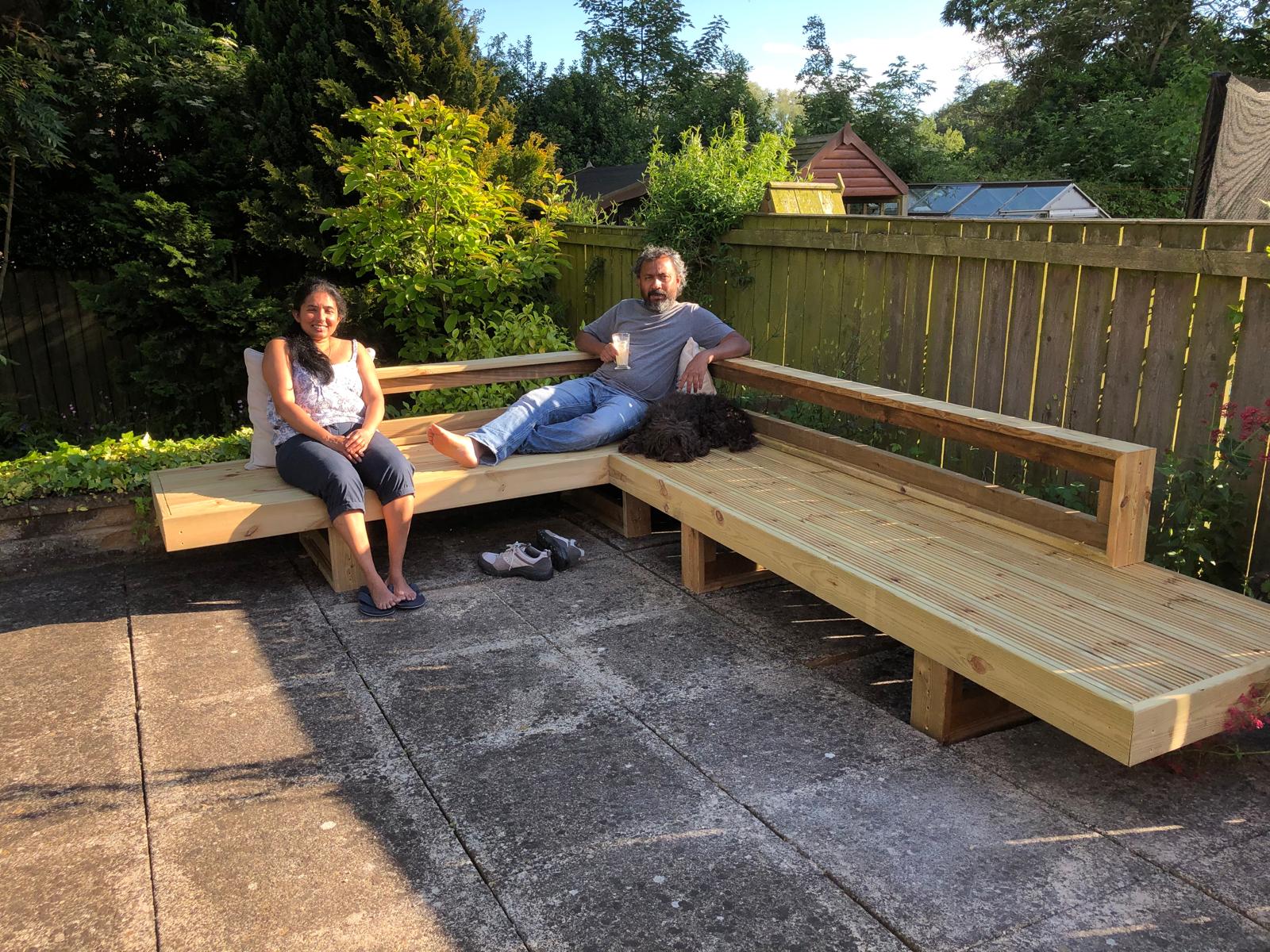
The L-shaped corner bench transformed an underused corner of the patio into prime seating. The design maximises seating capacity while maintaining an open, uncluttered feel. Wide armrests double as surfaces for drinks or plates. The low backrest provides support without blocking views of the garden.
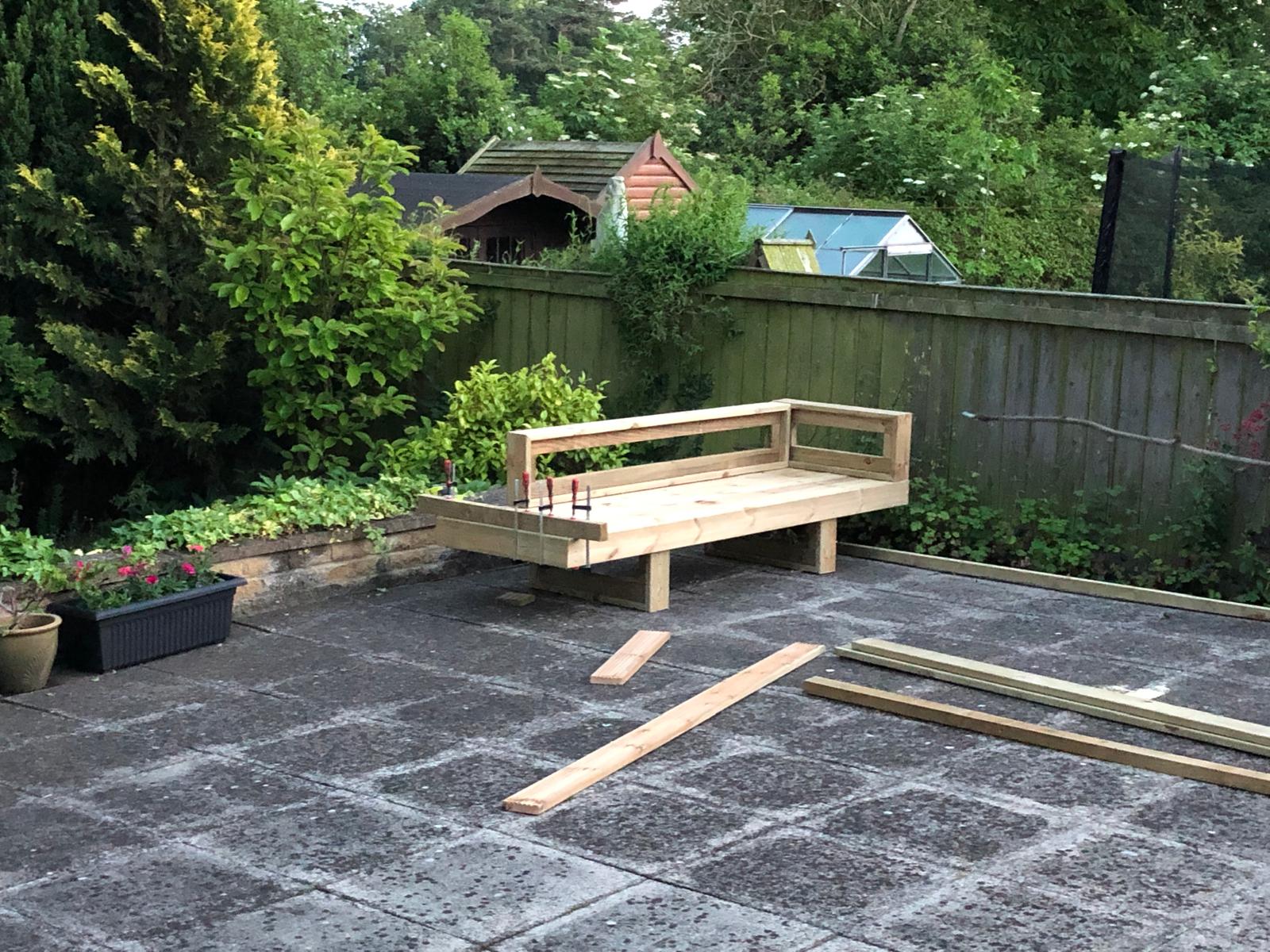
Construction began with a robust frame of pressure-treated joists, assembled with half-lap joints and secured with coach bolts. Planed decking boards form the seat and backrest, spaced slightly to allow drainage and air circulation. The entire structure is freestanding but heavy enough to remain stable in high winds.
The bench seats five to six adults comfortably and has become the default spot for outdoor meals, evening conversations, and quiet reading. Its stability and generous proportions make it feel like a permanent garden fixture rather than temporary garden furniture.
The Dining Table
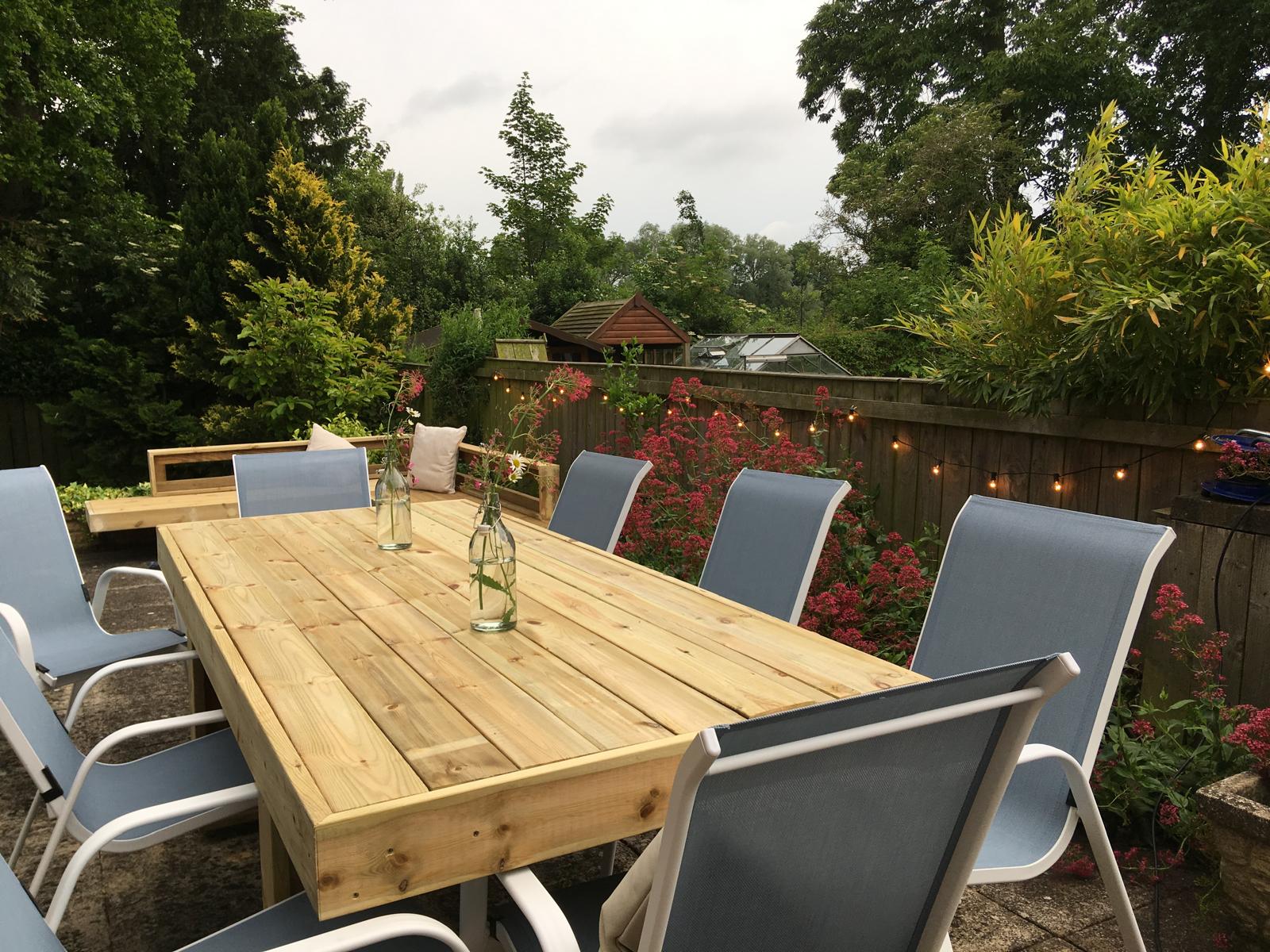
The matching dining table follows the same construction philosophy — simple, sturdy, and built to last. The tabletop is made from edge-joined decking boards, creating a solid surface wide enough for dining and food preparation. Sanded smooth and finished with wood oil, the surface develops a natural patina over time while remaining functional and easy to clean.
The frame uses mortise and tenon joinery with cross-bracing underneath for stability. Unlike commercial tables that wobble or flex under load, this design remains rock-solid even when fully laden with food, drinks, and elbows leaning heavily on the edges.
The table comfortably seats eight and has hosted countless meals, from casual weekend lunches to full family gatherings. It pairs perfectly with the corner bench, creating a cohesive outdoor dining and seating area that gets daily use throughout the warmer months.
Weathering & Maintenance
Outdoor furniture faces constant exposure to rain, sun, frost, and temperature swings. Regular maintenance extends the life of timber significantly. An annual sanding and re-oiling routine keeps the wood protected and looking fresh. Any loose fixings are tightened, and timber that shows signs of splitting or rot is replaced promptly.
Over time, the furniture develops character — slight variations in colour, smooth wear patterns on armrests and seating surfaces, and a settled, weathered appearance that blends naturally into the garden. This aging process is part of the appeal — each year, the pieces look more integrated into their surroundings.
Lessons Learned
Building outdoor furniture teaches patience and precision. Timber moves with moisture changes, so joints need to account for expansion and contraction. Outdoor finishes require more frequent reapplication than indoor work. Heavy structures need proper planning before assembly — once bolted together, they're not easy to reposition.
The most important lesson: build for your actual needs, not theoretical ones. The corner bench is sized for real people in real situations, not idealised furniture catalogue dimensions. The table height works with standard garden chairs because it was measured and tested before cutting timber. These practical considerations make the difference between furniture that gets used daily and furniture that sits empty.
Build Gallery